
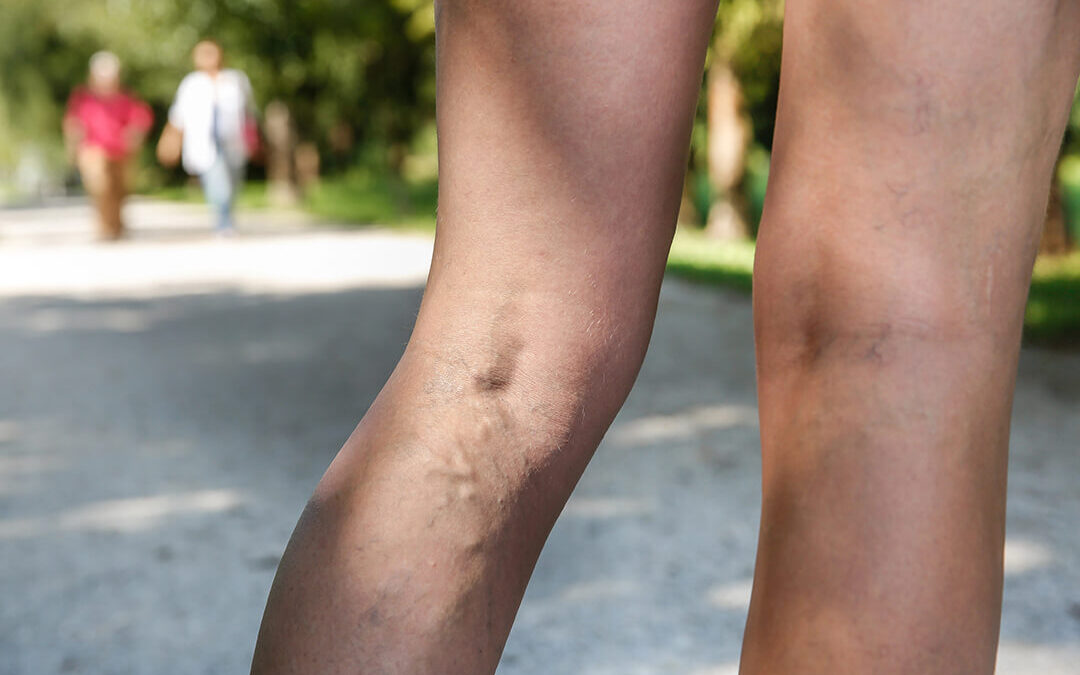
Many people live with varicose veins for years. They notice a few bulging veins, some end-of-day heaviness or mild swelling, and decide it is simply something to manage rather than something to address. Some are told that varicose veins are mostly a cosmetic issue. At Stratford Vein Clinic, one of the most common questions we hear is, “Can varicose veins get worse if left untreated?”
The honest answer is yes, varicose veins can get worse if left untreated. Varicose veins are a progressive condition, and the underlying cause – venous insufficiency – does not correct itself. That does not mean every patient will develop serious complications, and it does not mean you need to panic. It does mean that understanding what is happening inside your legs can help you decide when the right time to act is.
Why Varicose Veins Tend to Progress
Varicose veins are usually a visible sign of chronic venous insufficiency (CVI). Healthy leg veins contain small one-way valves that keep blood moving upward toward the heart. When those valves weaken or fail, blood flows backward and pools in the lower leg, a problem known as venous reflux.
That backward flow raises the pressure inside the veins. Over time, higher pressure stretches the vein walls further, which can damage more valves and allow even more blood to pool. In other words, the problem tends to be a slippery slope. Once a valve has failed, it does not repair itself, and no amount of time, exercise, or rest will restore it.
The speed of progression varies a great deal from person to person. Some patients stay relatively stable for years, while others notice changes within months. Factors that influence how quickly venous disease advances include family history, age, pregnancy history, time spent standing or sitting, body weight, and how many veins are involved.
What Does Progression Actually Look Like?
When venous disease advances, the changes tend to appear gradually. Common signs include:
- Symptoms that become more frequent or more intense, such as aching, heaviness, burning, throbbing, or night cramping
- Swelling that no longer fully resolves overnight
- More visible, larger, or more numerous varicose veins and clusters of spider veins
- Itching, dryness, or irritation of the skin around the lower leg, sometimes called stasis dermatitis
- Brownish or reddish discolouration of the skin near the ankle
- Skin that becomes tight, thickened, or leathery in texture
- Veins that are tender, hard, or warm to the touch
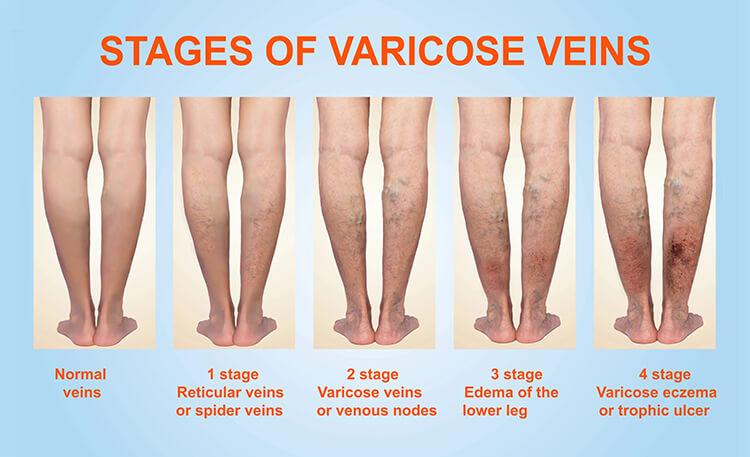
Each of these is a signal that the pressure inside your veins is affecting the surrounding tissue. Skin changes near the ankle, as well as edema, indicate that venous disease has begun to affect the surrounding tissue making it susceptible to possible ulcers. It is impossible to predict if an ulcer will develop but the more changes that occur in the ankle, the risk is certainly higher.
Possible Complications of Untreated Venous Disease
Most patients with varicose veins do not develop the complications below, but they are the reason we encourage people not to wait indefinitely.
Superficial thrombophlebitis
This is inflammation and clotting within a vein, close to the surface of the skin. It typically feels like a firm, red, painful cord along the vein, and generally happens within the varicose veins themselves.
Bleeding
Varicose veins near the skin surface can have very thin walls. A minor bump or scratch can occasionally cause bleeding that is surprisingly heavy because the pressure inside the vein is high.
Venous ulcers
In advanced disease, persistent pressure and poor circulation can break down the skin, usually near the ankle, forming an open sore. Venous ulcers can be slow to heal and tend to recur if the underlying vein problem is not treated.
Deep vein thrombosis (DVT)
There are many reasons that someone can develop a deep vein thrombosis. This risk is relatively small for most people, but if someone develops superficial thrombophlebitis in a superficial vein or varicose vein, there is a chance it can extend into the deep system. This can be a serious condition if not addressed.
If you ever develop sudden swelling, pain, warmth, or redness in one leg, or experience shortness of breath or chest pain, seek urgent medical care right away.
Do Exercise, Compression, or Weight Loss Stop Progression?
These measures are worth doing, and we encourage them. Regular walking supports the calf muscle pump, healthy weight reduces pressure on the venous system, and compression stockings can ease swelling, aching, and heaviness while they are worn.
However, these measures support your veins rather than repair them. They can help you feel better and may slow the pace of change, but they do not correct failed valves or close down a refluxing vein. For patients with established venous disease, they are best viewed as one part of a plan rather than a replacement for treatment.
Why Earlier Treatment Is Typically Simpler
Treating venous disease earlier, before skin anomalies or other complications develop, is typically more straightforward. Modern varicose vein treatment is minimally invasive and quite different from what many people imagine. At Stratford Vein Clinic, our options include:
- Endovenous Laser Treatment (EVLT): a laser fibre closes the diseased vein from the inside, performed under local anesthetic
- Ultrasound-Guided Foam Sclerotherapy (UGFS): a foam solution is injected into the vein under ultrasound guidance, causing it to close
- Microphlebectomy: visible surface veins are removed through very small incisions
- Vein stripping: reserved for select cases of more advanced disease
The right option depends on your individual anatomy, which is why every patient has a detailed venous mapping ultrasound performed by our registered ultrasound technologist before any plan is made. Most patients return to normal daily activities quickly after treatment.
When Is It Time to See a Vein Specialist?
You do not need to wait for severe symptoms or visible complications. A consultation makes sense if you have:
- Varicose veins that are growing, spreading, or becoming more uncomfortable
- Leg aching, heaviness, or swelling that is becoming more frequent
- Skin changes near the ankle, including discolouration, dryness, or thickening
- A history of superficial phlebitis or a vein that has bled
- Any open sore on the lower leg that is slow to heal
- A desire to understand what is happening in your legs and what your options are
You do not need a referral from your family doctor. Stratford Vein Clinic accepts self-referrals, and our Nurse Navigator will guide you through each step. We welcome patients from Stratford, Kitchener, Waterloo, Cambridge, London, Guelph, and across Southwestern Ontario.
Your initial consultation is covered by OHIP. Most vein procedures are an out-of-pocket expense, and flexible financing is available through Beautifi, so you can understand your options and costs before making any decisions.
Getting informed is not a commitment to treatment. It simply gives you the information to choose your timing, rather than having your veins choose it for you.
Frequently Asked Questions
Can varicose veins get worse if left untreated?
Yes. Varicose veins are caused by failed valves inside the leg veins, and those valves do not repair themselves. Over time, increased pressure in the veins can lead to more visible veins, worsening symptoms, skin changes, and in some cases complications such as superficial phlebitis, bleeding, or venous ulcers. The rate of progression varies from person to person.
How quickly do varicose veins get worse?
There is no set timeline. Some people notice little change for years, while others see symptoms or visible veins progress within months. Family history, age, pregnancy, and prolonged standing or sitting all influence how quickly venous disease advances. A venous mapping ultrasound is the best way to assess your individual situation.
What happens if you never treat varicose veins?
Many people with mild varicose veins manage for a long time without serious problems. However, untreated venous disease can progress to chronic swelling, skin discolouration and thickening near the ankle, superficial thrombophlebitis, bleeding from surface veins, and venous leg ulcers. Treating the underlying vein problem is the only way to address the cause rather than the symptoms.
Can compression stockings or exercise stop varicose veins from getting worse?
Compression stockings and regular exercise can reduce symptoms such as aching and swelling, and they support healthy circulation. They do not repair failed vein valves or eliminate reflux, so they cannot reverse established varicose veins. They are most useful as part of a broader care plan.
Are varicose veins dangerous?
Most varicose veins are not an emergency, but they are a sign of underlying venous insufficiency that can progress. Complications such as ulcers, bleeding, and superficial blood clots are possible in advanced or neglected cases. Sudden swelling, pain, or redness in one leg should be assessed urgently, as it can indicate a deep vein clot.
When should I see a doctor about varicose veins?
See a vein specialist if your varicose veins are becoming more painful, your swelling is increasing, you notice skin changes near the ankle, or you have had a vein bleed or become inflamed. You can also book a consultation simply to understand your options. At Stratford Vein Clinic, no referral is required and your initial consultation is covered by OHIP.