
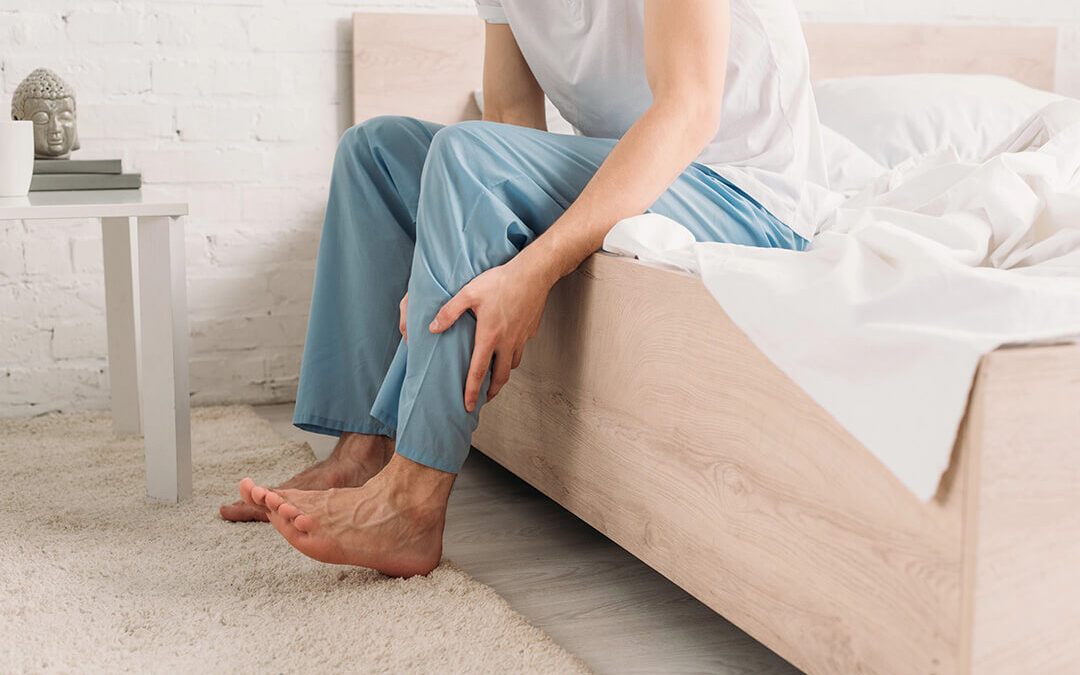
If you find yourself sitting down at the end of the day and noticing that your legs feel heavy, achy, or swollen, you are not alone. “Why do my legs ache at the end of the day?” is one of the most common questions we hear from patients at Stratford Vein Clinic, and it is also one of the most frequently dismissed complaints. Many people chalk it up to being on their feet too long, getting older, or simply not being in good enough shape. In most cases, the real explanation is something else entirely.
Leg aching and heaviness that builds throughout the day and improves when you put your feet up is a classic pattern of venous disease. Understanding why it happens, and what it means for your long-term vascular health, is the first step toward doing something about it.
What Causes Legs to Ache at the End of the Day?
To understand why your legs ache, it helps to understand how leg veins are supposed to work.
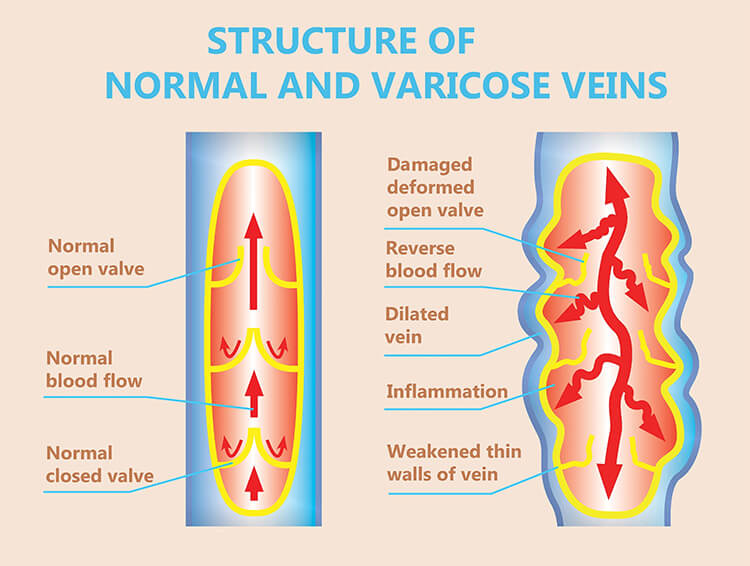 Your leg veins have a difficult job. Unlike arteries, which carry blood away from the heart with the help of the heart’s pumping pressure, veins must push blood upward against gravity, back toward the heart. They rely on a series of small one-way valves to do this. Each valve opens to let blood move upward, then closes to prevent it from falling back down.
When those valves weaken or fail, blood does not move efficiently. Instead of flowing steadily upward, it pools and collects in the lower leg. That pooling creates pressure inside the vein walls. Over time, the increased pressure causes the veins to stretch and dilate. The result is the familiar pattern of aching, heaviness, and fatigue that worsens as the day goes on and blood continues to accumulate.
This condition is called chronic venous insufficiency (CVI), and it is the underlying cause of varicose veins in most patients.
Why Does It Get Worse as the Day Goes On?
The timing of your symptoms is one of the most telling signs that venous disease is involved.
Gravity works against your veins all day. The longer you stand or sit with your feet on the floor, the more blood accumulates in your lower legs. By late afternoon or evening, the pressure has been building for hours, which is why the aching and heaviness tend to peak at the end of the day rather than first thing in the morning.
When you lie down or elevate your legs, gravity is no longer working against you. Blood drains from the lower leg, pressure decreases, and your symptoms ease. If your legs feel noticeably better after rest and worse after a long day on your feet, that pattern is a strong indicator that venous insufficiency is involved.
Other Symptoms That Often Come with Leg Aching
Leg aching from venous disease rarely appears on its own. Other symptoms that commonly accompany it include:
- Swelling in the ankles or feet, particularly in the evening
- A feeling of heaviness or fatigue in the legs, even without significant physical exertion
- Visible varicose veins or clusters of spider veins
- Throbbing or a burning sensation in the lower leg
- Itching or skin irritation around the vein
- Restless legs at night, particularly an uncomfortable urge to move the legs when trying to sleep
- Skin discolouration, bruising or spider vein appearance near the ankle in more advanced cases
You do not need to have all of these symptoms to have venous disease. Some patients come to us with significant venous insufficiency but only one or two of these complaints. Others have visible varicose veins but relatively mild symptoms. The degree of visible disease does not always correspond to the degree of discomfort.
Is It Just Tired Legs, or Is It Something More?
This is the question most patients struggle with, and it is a fair one. Not every achy leg is a sign of venous disease. Muscle fatigue, joint aches, dehydration, certain medications, and other conditions can also cause leg discomfort.
The key distinction is the pattern. Venous disease tends to produce symptoms that:
- Build progressively throughout the day
- Improve with leg elevation or rest
- Worsen in hot weather or after prolonged standing
- Recur consistently rather than appearing only after unusual physical activity
- Are accompanied by visible veins, swelling, or skin changes
If your leg aching fits this pattern and has been present for weeks or months rather than appearing after a single unusually active day, it is worth having your veins assessed.
Can You Manage Leg Aching Without Treatment?
Compression stockings and lifestyle adjustments can provide meaningful relief from day-to-day symptoms. Walking regularly activates the calf muscle pump, which helps push blood upward and reduces pooling. Elevating your legs in the evening reduces pressure and eases discomfort. Compression stockings apply graduated external pressure that partially counteracts the failing valve function and can significantly reduce swelling and heaviness while you are wearing them.
These measures are genuinely helpful, and we recommend them to most of our patients as part of their overall care. The important caveat is that they manage symptoms rather than addressing the underlying problem. Venous valves that have failed do not repair themselves. Without treatment, venous disease is progressive: symptoms tend to worsen over time, visible disease tends to expand, and the risk of complications including skin changes, superficial phlebitis, and venous ulcers increases.
Managing symptoms indefinitely is a reasonable short-term approach. It is less reasonable as a long-term strategy when effective, minimally invasive treatment is available.
When Should You See a Vein Specialist?
If you have been experiencing leg aching, heaviness, or swelling on a regular basis and the pattern fits what is described above, a consultation with a vein specialist is the appropriate next step. You do not need to wait until your symptoms are severe, and you do not need a referral from your family doctor.
At Stratford Vein Clinic, every patient begins with an intake with our nurse navigator, followed by an OHIP-covered consultation with one of our surgeons and a detailed venous mapping ultrasound performed by our registered ultrasound technologist. This gives our surgeons a precise picture of your venous anatomy before any treatment decisions are made. We serve patients from Stratford, Kitchener, Waterloo, Cambridge, London, Guelph, and across Southwestern Ontario.
Self-referrals are welcome. If your legs have been telling you something at the end of every day, it may be time to find out what they are trying to say.
Frequently Asked Questions
Why do my legs ache and swell at the end of the day?
Leg aching and swelling that worsens throughout the day and improves with rest is a common sign of chronic venous insufficiency. This condition occurs when the valves inside the leg veins stop functioning properly, causing blood to pool in the lower leg. The increased pressure produces the aching, heaviness, and swelling that many people notice by late afternoon or evening.
Is leg aching at the end of the day normal?
Occasional leg fatigue after an unusually active day is normal. Leg aching, heaviness, or swelling that occurs regularly, builds throughout the day, and eases when you elevate your legs is not simply a normal part of aging or activity. This pattern is a common indicator of venous disease and is worth having assessed by a vein specialist.
Can varicose veins cause leg pain and aching?
Yes. Varicose veins are a visible sign of underlying venous insufficiency, and the same valve failure that causes visible veins also causes the pressure and pooling that produce leg pain, aching, and heaviness. Some patients with venous disease experience significant discomfort even when their visible varicose veins appear relatively minor.
What is the difference between muscle soreness and venous leg aching?
Muscle soreness typically follows physical exertion, appears within 24 to 48 hours of activity, and resolves within a few days. Venous leg aching follows a daily cycle, builds progressively throughout the day regardless of activity level, and recurs consistently. Venous aching also tends to improve with leg elevation, which muscle soreness does not.
Do I need a doctor’s referral to be assessed for varicose veins in Ontario?
No. Stratford Vein Clinic accepts self-referrals. You can complete the self-referral form on our website and our nurse navigator will contact you directly to begin the assessment process. Your initial consultation is covered by OHIP.